Northrop F-89D Scorpion, S/N 52-1959
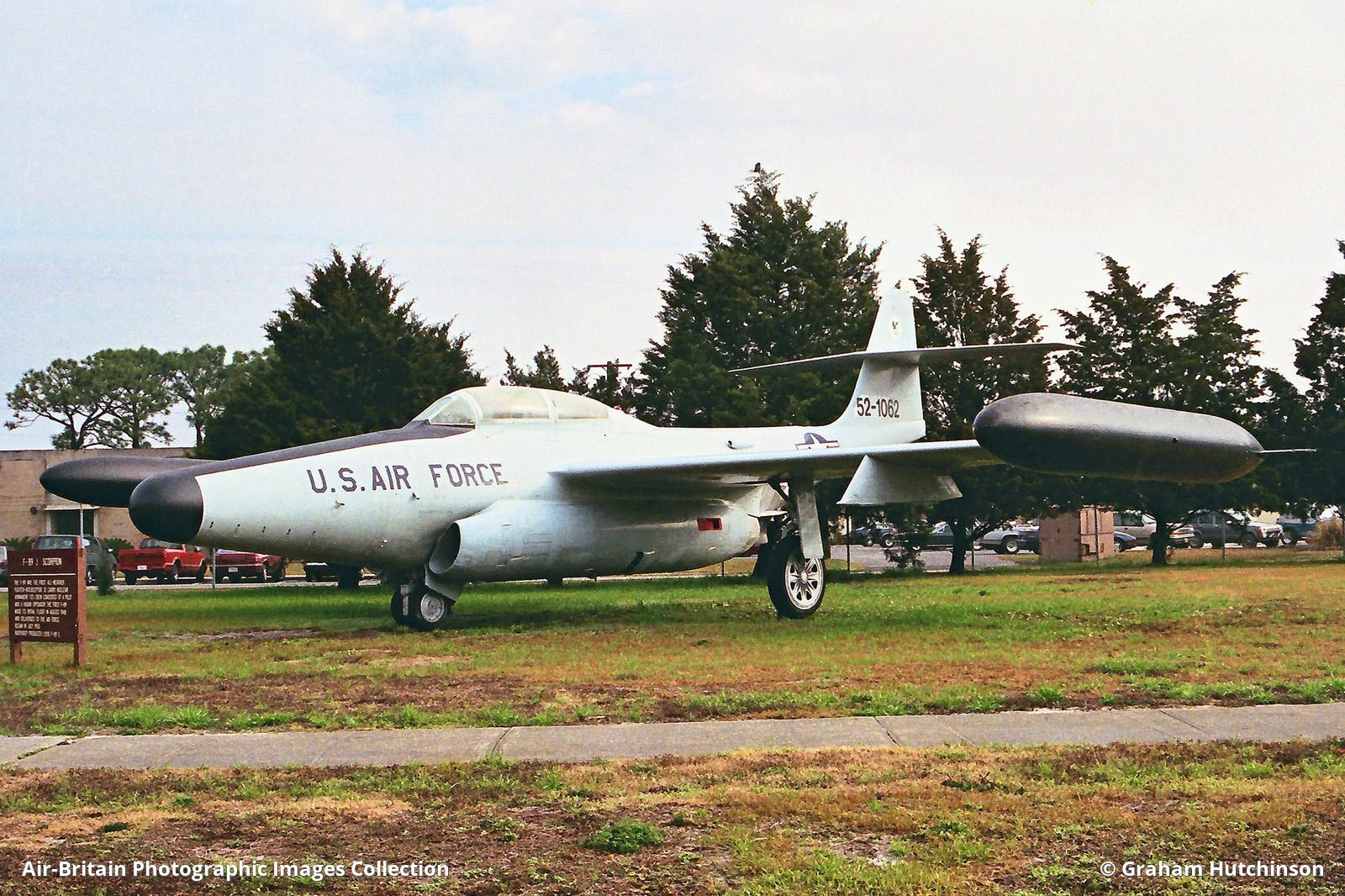
The Northrop F-89D Scorpion was a Cold War-era interceptor developed by Northrop Corporation for the U.S. Air Force to defend North American airspace against potential Soviet bomber threats. Entering service in the early 1950s, the Scorpion was designed as an all-weather, radar-equipped interceptor capable of operating day or night. Its straight-wing design, twin-engine configuration, and two-seat crew—pilot and radar operator—reflected the emphasis on guided interception using onboard radar systems during a time when air defense relied heavily on ground-controlled interception networks.
The F-89D variant represented a significant evolution in interceptor armament philosophy. Unlike earlier versions equipped with cannons, the F-89D replaced guns with distinctive wingtip pods containing large numbers of unguided “Mighty Mouse” rockets, designed to create a dense aerial barrage against incoming bomber formations. This approach prioritized volume of fire over precision, with the expectation that a salvo of rockets would increase the probability of destroying or disabling enemy aircraft. The aircraft also incorporated improved fire-control systems that worked in conjunction with radar to assist the crew in targeting during high-speed interception missions.
While innovative, the F-89D’s rocket-based armament had limitations in accuracy and effectiveness, particularly against maneuvering targets. Nevertheless, the aircraft played an important role in early continental air defense and contributed to the evolution of interceptor tactics and weapons systems. The Scorpion series, including the F-89D, helped pave the way for more advanced interceptors equipped with guided missiles and improved radar technology. Its service during a critical period of the Cold War highlights the rapid technological experimentation and adaptation that defined early jet-age air defense strategy.