
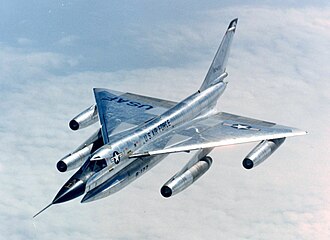
Convair YB-58A Hustler, S/N 55-665
The Convair YB-58A Hustler was the prototype version of the United States’ first operational supersonic bomber, developed during the 1950s by Convair for the U.S. Air Force. Designed at the height of the Cold War, the aircraft reflected a shift toward high-speed, high-altitude penetration as a means of delivering nuclear weapons. The YB-58A featured a distinctive delta wing configuration, four powerful turbojet engines mounted in underwing pods, and a slender fuselage optimized for Mach 2 performance. Its design pushed the limits of aerodynamics, materials, and propulsion for its time.
First flown in 1956, the YB-58A served as the critical test platform for validating the technologies that would define the production B-58 Hustler. It introduced advanced concepts such as a tandem cockpit with three crew members in separate, pressurized compartments, and innovative escape capsules rather than traditional ejection seats. One of its most notable features was the large external weapons/fuel pod mounted beneath the fuselage, which streamlined the aircraft while carrying both fuel and a nuclear payload. The prototype phase revealed both the aircraft’s remarkable speed capabilities and the significant challenges associated with operating such a complex, high-performance system.
The lessons learned from the YB-58A directly informed the operational Convair B-58 Hustler, which became a symbol of technological ambition during the Cold War. While the Hustler achieved numerous speed records and demonstrated unmatched performance, it also proved costly and demanding to maintain, leading to a relatively short service life. Nevertheless, the YB-58A’s development marked a major milestone in supersonic bomber design and contributed valuable advancements in high-speed aerodynamics, crew safety systems, and strategic aviation concepts that influenced future aircraft programs.