
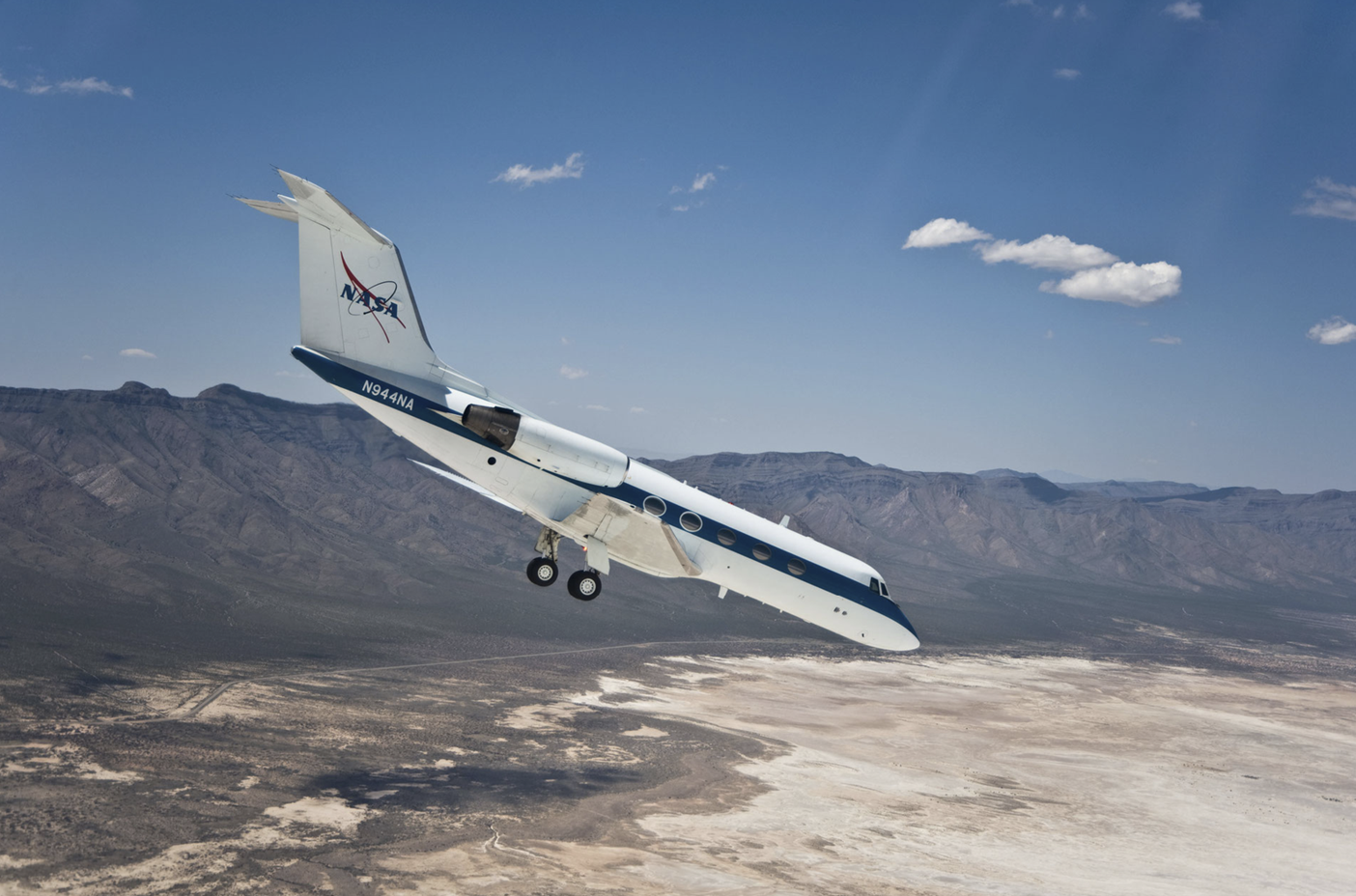
Gulfstream G2-G3 Shuttle Training Aircraft, S/N N9449A
The Gulfstream II and Gulfstream III were modified by NASA to serve as Shuttle Training Aircraft (STA), providing astronauts with a highly realistic simulation of the Space Shuttle’s final approach and landing profile. Beginning in the late 1970s, NASA selected the Gulfstream platform because of its performance envelope, reliability, and ability to be extensively modified. The aircraft were equipped with advanced avionics, software, and cockpit displays that allowed the left seat to replicate the handling characteristics of the Space Shuttle during its unpowered, steep-descent approach to landing.
The Shuttle’s landing was unlike that of conventional aircraft—it descended at a much steeper glide slope and had no opportunity for a go-around once committed. To replicate this, the STA used a sophisticated computer-controlled flight system that altered control responses, effectively “degrading” the Gulfstream’s normal handling to match the orbiter’s aerodynamic characteristics. A deployable thrust reverser system helped the aircraft achieve the high descent rates required for realistic training profiles. Astronauts would fly repeated simulated approaches, building the muscle memory and visual cues necessary for actual Shuttle landings.
The STA fleet operated for more than three decades, supporting every Space Shuttle commander and pilot. Based primarily at Johnson Space Center and operating from sites such as Kennedy Space Center and Edwards Air Force Base, the aircraft became an essential element of the Shuttle training pipeline. When the Shuttle program concluded in 2011, the STA mission ended as well, leaving behind a legacy as one of the most innovative airborne training systems ever developed.