
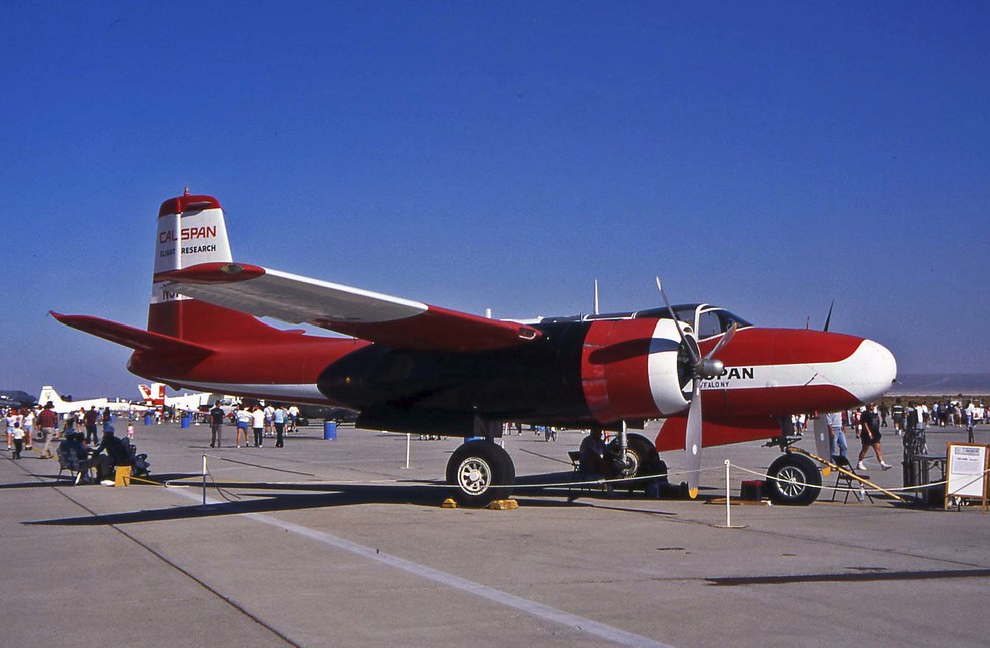
Douglas TB-26B Invader, S/N 44-34165
The Douglas TB-26B Invader was a training and transition variant of the versatile A-26 Invader, a twin-engine light bomber and attack aircraft that saw extensive service from World War II through the early Cold War. As the U.S. military adapted wartime aircraft for postwar needs, the TB-26B was created to support pilot conversion and proficiency training, particularly as crews transitioned into multi-engine, high-performance aircraft. Retaining the Invader’s robust airframe and flight characteristics, the TB-26B played a quiet but essential role in sustaining operational readiness during a rapidly evolving aviation era.
Structurally, the TB-26B was based on the A-26B gun-nose configuration, powered by two Pratt & Whitney R-2800 Double Wasp radial engines, which provided excellent speed, range, and payload capability for its class. For the training mission, combat armament was typically removed or disabled, and the aircraft was modified to accommodate dual controls and instructor oversight, allowing safe instruction in advanced handling, engine management, and instrument flying. The Invader’s strong performance envelope made it particularly valuable for preparing pilots for operational aircraft with similar demands.
Operationally, TB-26B aircraft were used by the U.S. Air Force and Air National Guard units throughout the late 1940s and 1950s, bridging the gap between wartime piston-engine bombers and emerging jet aircraft. While it lacked the combat recognition of its attack-configured counterparts, the TB-26B contributed directly to aircrew competence and safety during a critical transition period in military aviation. Today, the type is remembered as part of the broader Invader legacy—an aircraft family renowned for durability, adaptability, and long service across multiple roles and conflicts.