
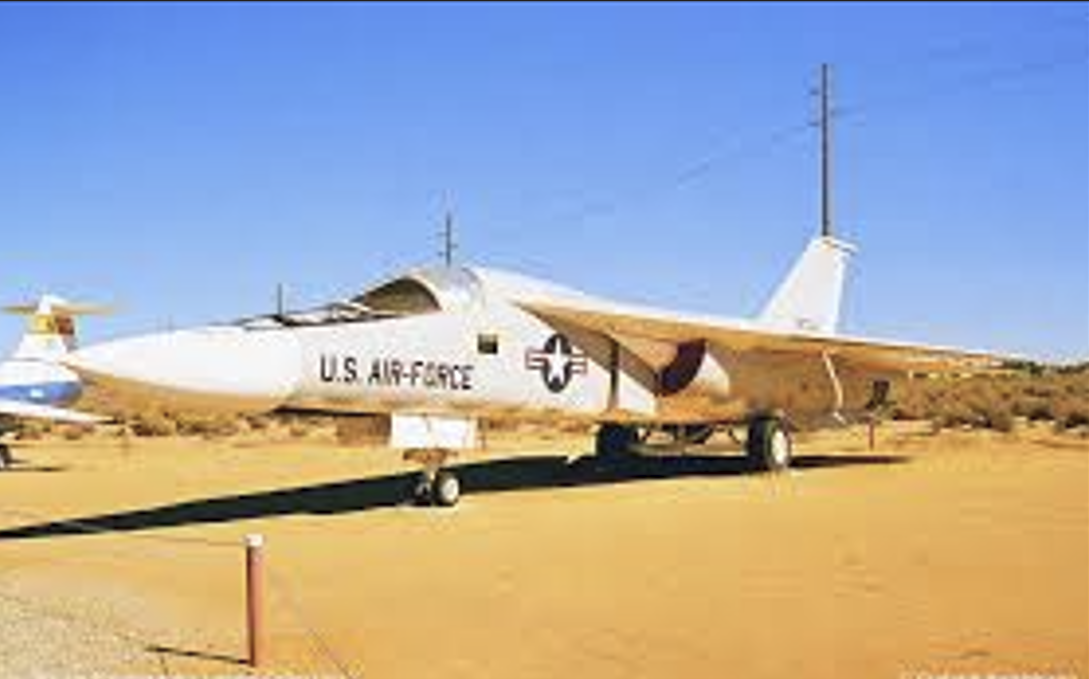
General Dynamics NF-111A Aardvark, S/N 63-9778
The General Dynamics NF-111A Aardvark was a highly modified test version of the F-111 designed to support advanced flight research for NASA and the U.S. Air Force. Derived from the General Dynamics F-111 Aardvark, the NF-111A incorporated significant structural and aerodynamic changes to explore new flight control concepts. Most notably, it was equipped with forward-mounted canards and a spin-recovery parachute system, making it visually distinct from standard operational F-111 variants. The aircraft became part of NASA’s research fleet at NASA’s Flight Research Center (now Armstrong Flight Research Center) at Edwards Air Force Base.
During the 1970s and early 1980s, the NF-111A played a key role in pioneering digital fly-by-wire and flight control research. At a time when electronically controlled flight systems were still emerging, the aircraft served as a flying laboratory for evaluating handling qualities, control law development, and aerodynamic behavior at high angles of attack. Data gathered from the NF-111A program contributed to advancements later applied to aircraft such as the F-16 Fighting Falcon and other high-performance fighters. The program also expanded understanding of spin dynamics and recovery techniques for large, variable-geometry aircraft.
By the mid-1980s, as digital flight control systems matured and newer research platforms became available, the NF-111A’s primary test missions concluded. The aircraft left a lasting legacy in the evolution of fly-by-wire technology and advanced stability control concepts that are now standard in modern combat aircraft. Though only a small number of NF-111A aircraft were modified, their contribution to flight research significantly influenced the development of future generations of military and experimental aircraft.