
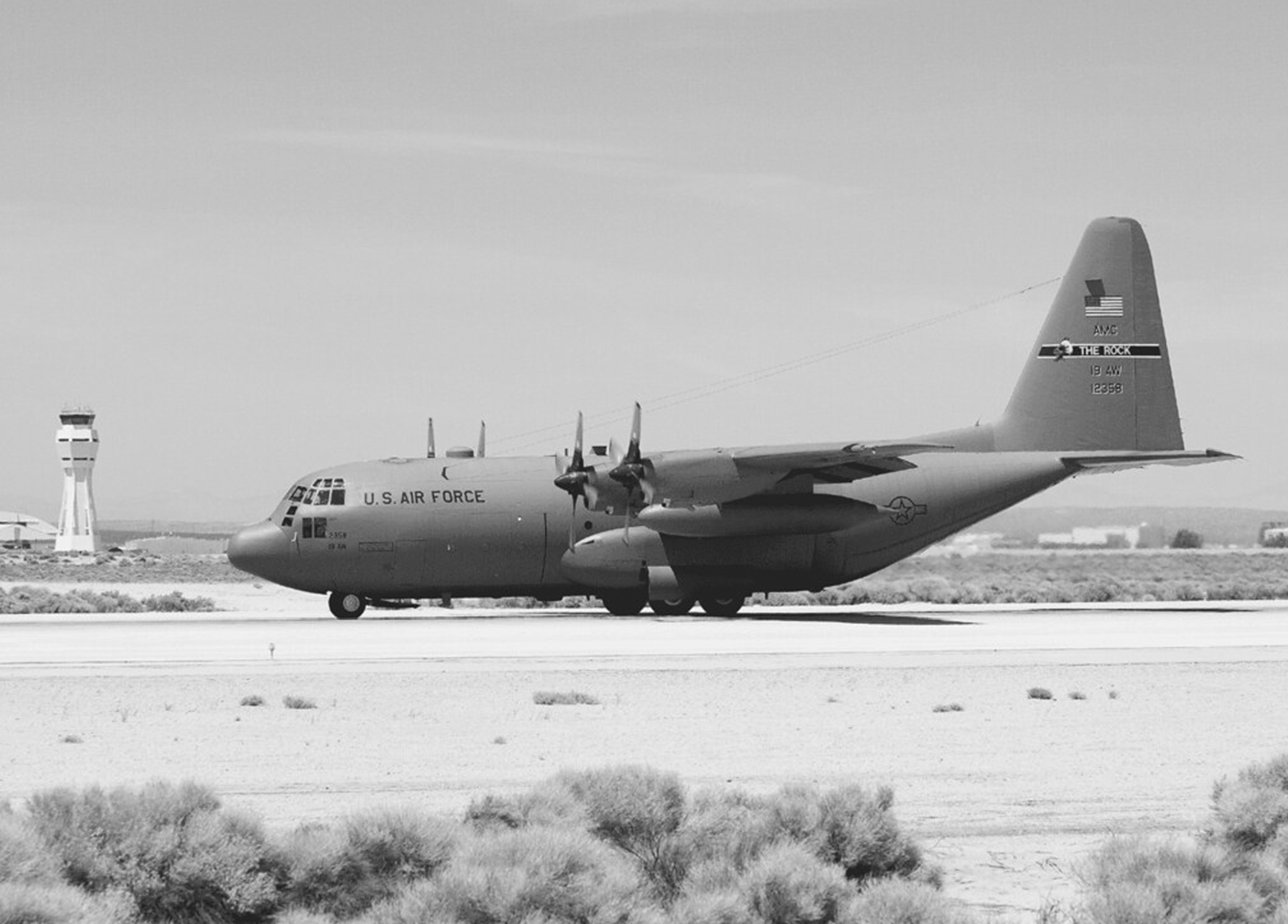
Lockheed Martin C130E Hercules, S/N 61-2358
The Lockheed C-130 Hercules is one of the most versatile and enduring airlifters ever built, and the C-130E represented a major step forward in the aircraft’s evolution. Developed by Lockheed Martin (originally Lockheed), the C-130 first flew in 1954, but the “E” model—introduced in the early 1960s—added significantly increased range and payload capability. This was achieved through more powerful Allison T56 turboprop engines and the addition of external wing fuel tanks, allowing the aircraft to support long-range transport missions without refueling. The C-130E quickly became a backbone tactical airlifter for the U.S. Air Force and allied nations.
The C-130E proved its value during the Vietnam War, where it conducted troop transport, cargo delivery, medical evacuation, and airdrop operations into short and austere airfields. Its rugged landing gear, high-mounted wings, and rear loading ramp allowed it to operate from rough, unimproved runways, making it indispensable in both combat and humanitarian missions. Beyond Southeast Asia, the aircraft supported Cold War global mobility operations, disaster relief efforts, and special missions around the world.
Over time, many C-130E aircraft were upgraded or transitioned into specialized roles, including electronic warfare, weather reconnaissance, and aerial firefighting support. Although later variants such as the C-130H and C-130J introduced modern avionics and more efficient engines, the C-130E laid the foundation for the Hercules’ reputation for reliability, adaptability, and longevity. Decades after its introduction, the Hercules family remains in production and continues to serve as a critical element of global airlift capability.