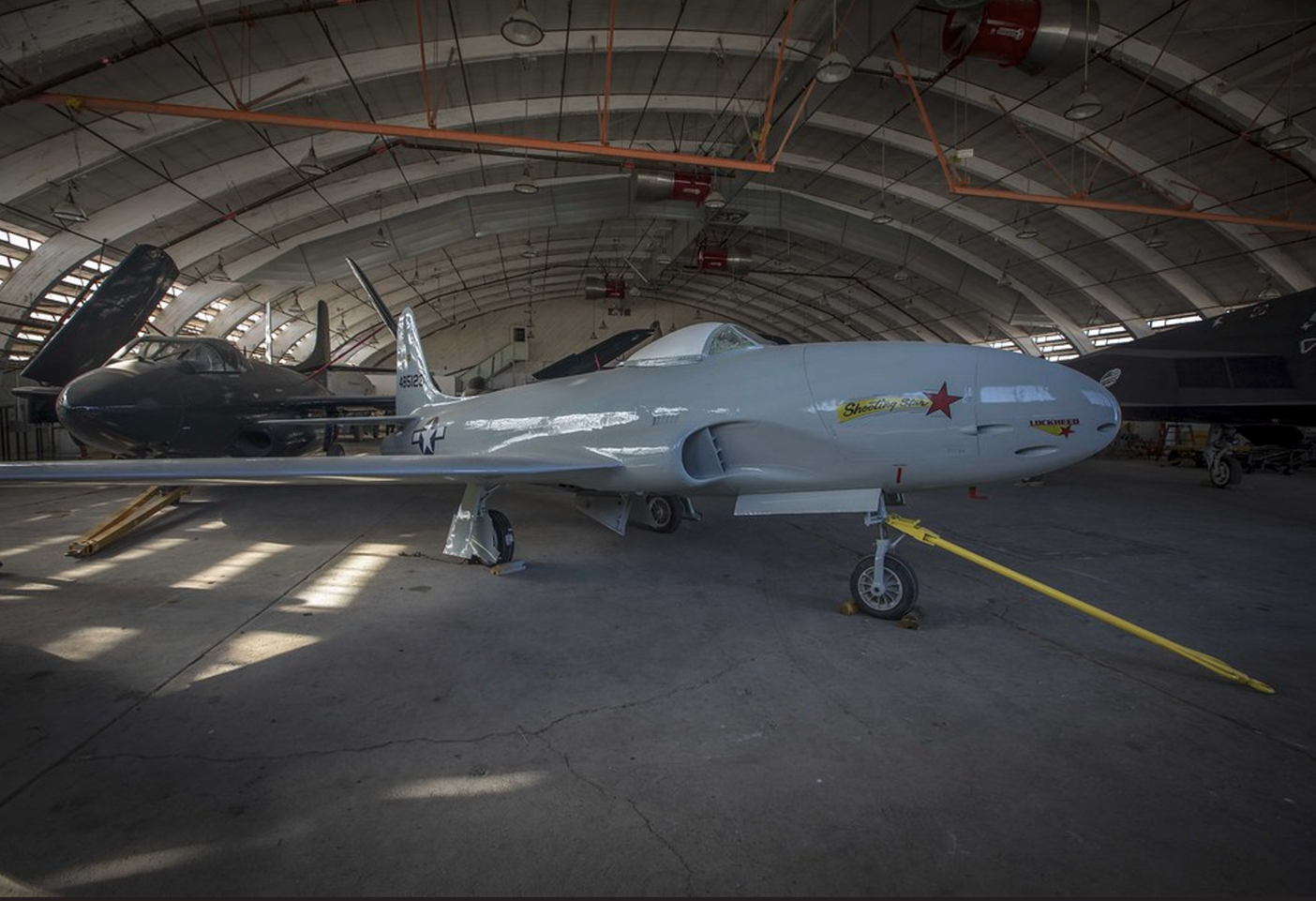
Lockheed Martin EF-80 Shooting Star, S/N 44-85123
The Lockheed F-80 Shooting Star—originally designated the P-80 and later redesignated F-80 in 1948—was the United States’ first operational jet fighter. Developed by Lockheed Corporation during the final years of World War II, the aircraft was designed in response to intelligence reports of advanced German jet fighters. Although it arrived too late to see significant combat in WWII, the Shooting Star marked a major technological leap for U.S. military aviation, transitioning the Army Air Forces from piston-engine fighters into the jet age.
Early production models, sometimes informally referred to under transitional designations such as “EF-80” during experimental and evaluation phases, helped refine jet propulsion integration, high-speed aerodynamics, and pilot training for jet operations. The F-80 became the backbone of the newly formed United States Air Force in the late 1940s and served as an essential bridge between wartime propeller-driven fighters and more advanced swept-wing jets that followed.
The Shooting Star saw extensive combat during the Korean War, where it initially achieved the first U.S. jet-versus-jet victories before being gradually replaced in the air superiority role by the swept-wing F-86 Sabre. Despite this transition, the F-80 continued to serve effectively in ground-attack missions. Its legacy extended further through its trainer variant, the T-33, which became one of the most widely used jet trainers in history. The F-80 family ultimately established the operational foundation for U.S. jet fighter development in the Cold War era.