
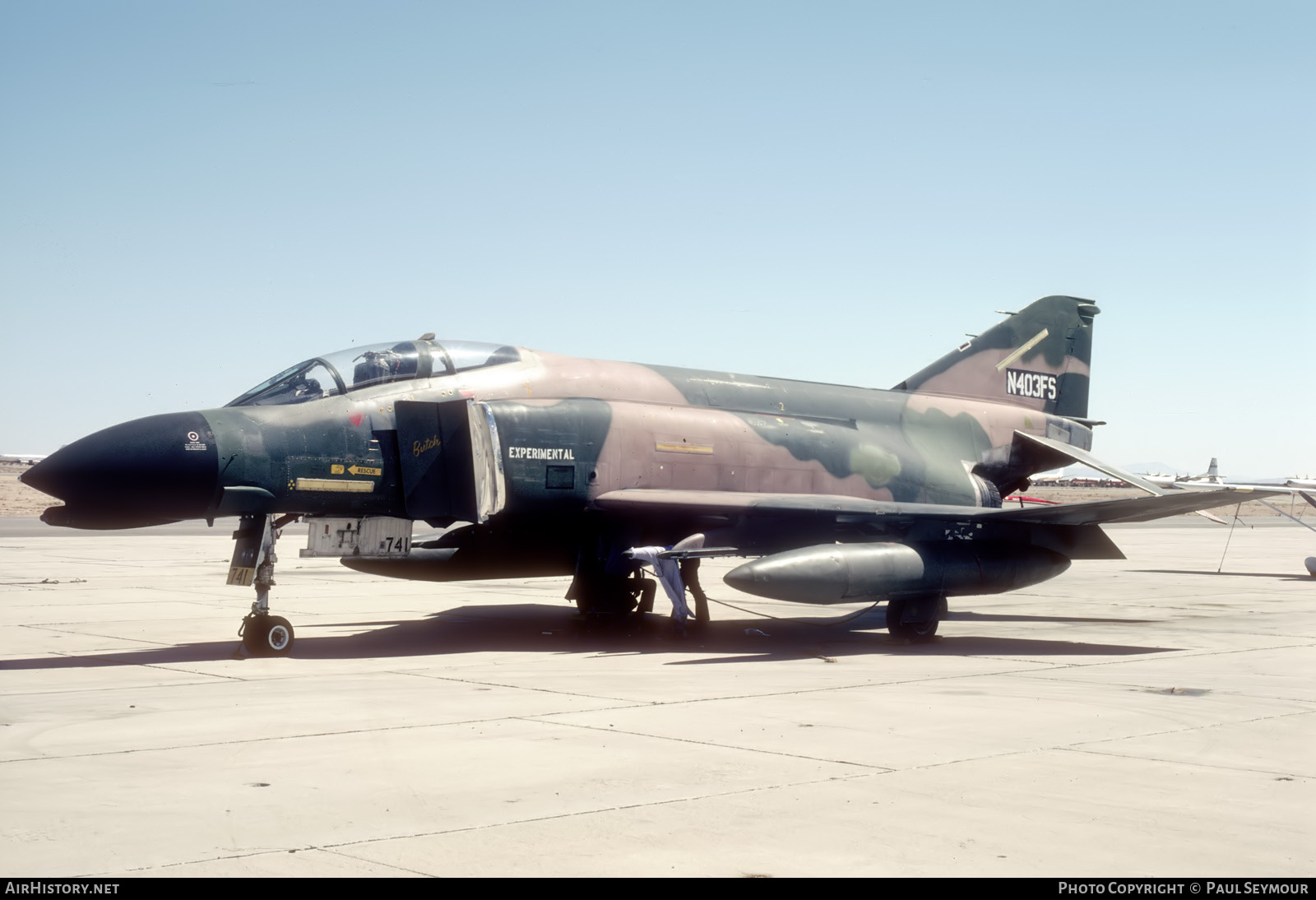
McDonnell F-4C Phantom II, S/N 64-0741
The McDonnell F-4C Phantom II was a key early U.S. Air Force version of the legendary Phantom II, developed by McDonnell Aircraft in the early 1960s. Originally designed for the U.S. Navy as a fleet defense interceptor, the Phantom was adapted for Air Force use to fulfill both air superiority and ground-attack roles. The F-4C incorporated features tailored to USAF requirements, including different avionics, controls, and refueling systems. Powered by twin turbojet engines and capable of speeds exceeding Mach 2, it represented a major leap in performance and versatility over earlier fighter aircraft.
The F-4C saw extensive combat during the Vietnam War, where it served as a multi-role platform conducting air-to-air combat, close air support, and interdiction missions. Initially designed without an internal gun—relying instead on radar-guided and infrared missiles—the aircraft revealed both strengths and limitations in real-world combat. Its speed, payload capacity, and radar capability made it formidable, but early missile reliability and rules of engagement highlighted the need for improved dogfighting capability. These lessons would later influence upgrades and future fighter designs.
Despite early challenges, the F-4C helped establish the Phantom II as one of the most iconic and widely used combat aircraft of its era. It served not only with the U.S. Air Force but also with allied nations, contributing to its global legacy. The aircraft’s adaptability, durability, and sheer performance ensured its continued use in various upgraded forms for decades. The F-4C variant, in particular, marked the beginning of the Phantom’s long and impactful service with the Air Force, shaping tactical aviation doctrine during a critical period of modern aerial warfare.