
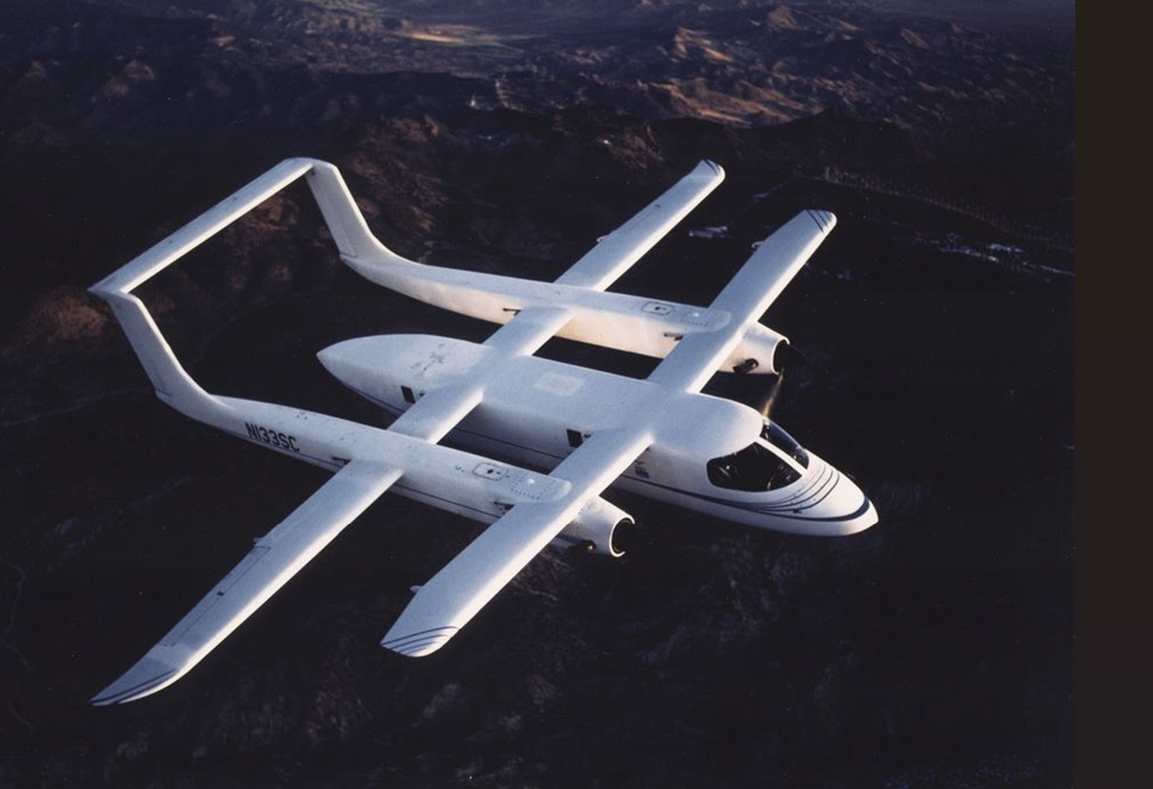
Scaled Composites ATTT, Model 133
The Scaled Composites Model 133 ATTT was an experimental aircraft developed in the mid-1980s by Scaled Composites, the innovative design firm founded by aerospace engineer Burt Rutan. The aircraft was built as a technology demonstrator for the Defense Advanced Research Projects Agency and the U.S. military to explore new design concepts for future tactical transport aircraft. Its purpose was to test advanced aerodynamic configurations and composite construction techniques that could improve short-takeoff performance, fuel efficiency, and operational flexibility for military cargo aircraft.
First flown in 1987, the ATTT Model 133 featured a distinctive twin-boom configuration with a high wing and rear cargo area designed to simulate the operational needs of a tactical transport aircraft. The aircraft incorporated extensive composite materials, lightweight structures, and unconventional aerodynamic shaping to study how modern design approaches could enhance aircraft performance. The project allowed engineers to gather valuable flight data on handling characteristics, lift generation, and structural efficiency, helping evaluate concepts that could influence future military transport designs.
Although the ATTT was strictly a technology demonstrator and not intended for production, the program successfully validated many advanced design ideas that were becoming increasingly important in modern aerospace engineering. The project reflected Scaled Composites’ broader role as an experimental design laboratory where unconventional aircraft concepts could be rapidly designed, built, and tested. The lessons learned from the ATTT program contributed to the evolving understanding of composite aircraft structures and innovative aerodynamic layouts that continue to influence experimental and military aircraft development today.