
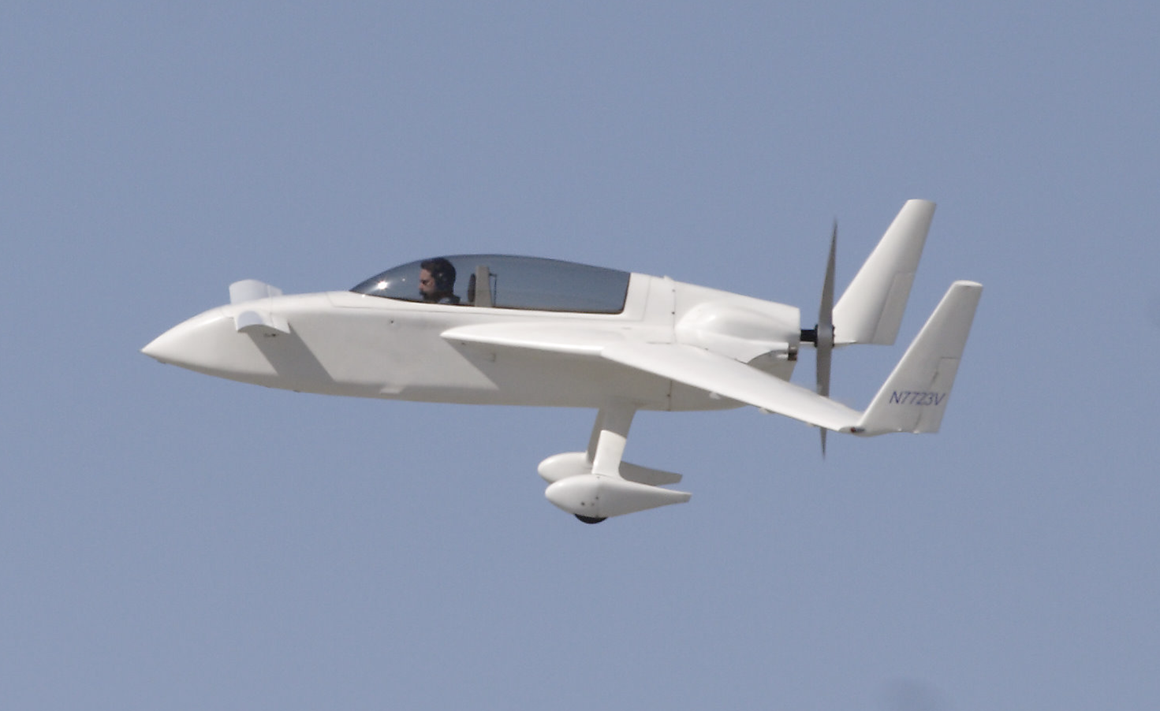
Rutan VariEze, S/N N309V
The Rutan VariEze is a pioneering experimental aircraft designed by aerospace innovator Burt Rutan in the early 1970s. First flown in 1975, the VariEze was created to demonstrate the potential of composite materials, canard aerodynamics, and highly efficient homebuilt aircraft design. Unlike traditional aircraft, the VariEze features a small forward wing (canard) and a rear-mounted pusher propeller, giving it a distinctive appearance while improving stall characteristics and aerodynamic efficiency. The aircraft was designed to be built by individuals using fiberglass composite construction techniques, which were relatively new to aviation at the time.
The VariEze quickly gained attention within the experimental aviation community after its debut at the EAA AirVenture Oshkosh, where Rutan demonstrated the aircraft’s performance and efficiency. Powered typically by a converted Volkswagen engine, the VariEze was capable of cruising at speeds over 160 mph while consuming significantly less fuel than many aircraft of similar performance. The design emphasized simplicity, efficiency, and safety, including a stall-resistant configuration created by the canard wing, which stalls before the main wing and prevents the aircraft from entering a traditional stall.
The success of the VariEze helped spark a revolution in experimental and kit-built aircraft, proving that lightweight composite construction could produce strong, efficient airframes. Thousands of builders around the world constructed VariEze aircraft from plans, and the design later evolved into the larger and more refined Rutan Long-EZ. Today, the VariEze remains one of the most influential homebuilt aircraft ever developed, helping usher in a new era of innovative experimental aviation and establishing Burt Rutan as one of the most important aircraft designers of the late 20th century.