
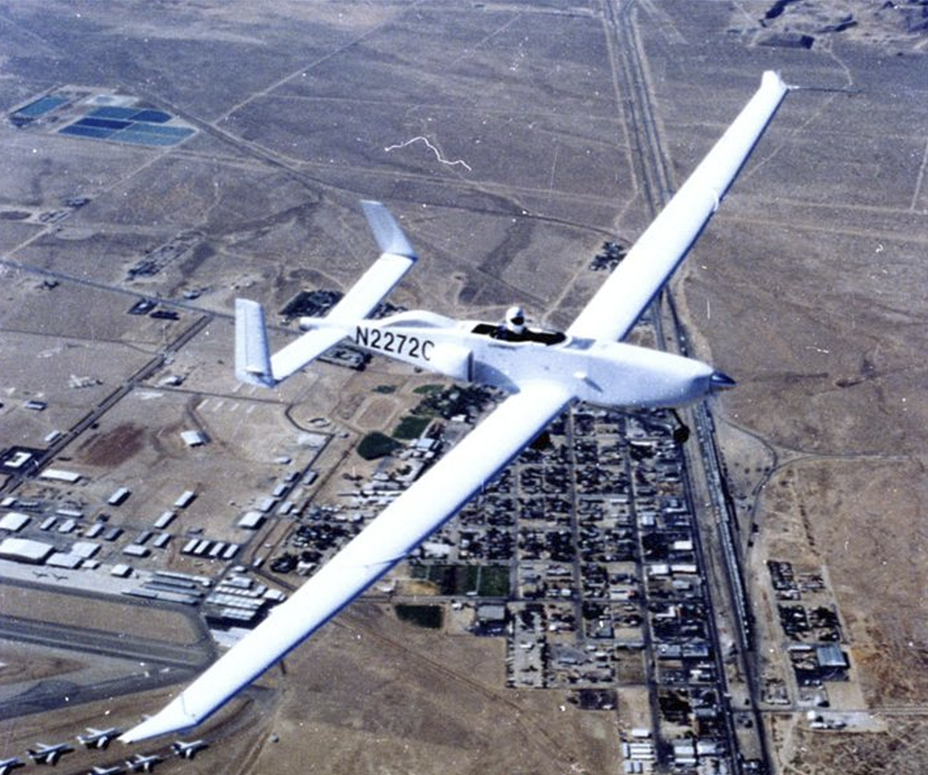
Scaled Composites Raptor D-2, Model 226
The Scaled Composites Model 226 D-2 was an advanced experimental unmanned aircraft developed by Scaled Composites, the Mojave-based aerospace firm founded by renowned aircraft designer Burt Rutan. Built during the early 1990s, the D-2 was part of a broader effort to explore high-altitude, long-endurance unmanned reconnaissance aircraft concepts for military and research applications. At the time, unmanned aerial vehicles were still emerging as practical intelligence platforms, and experimental aircraft like the D-2 helped demonstrate the feasibility of persistent aerial surveillance without placing pilots at risk.
The aircraft featured a long, high-aspect-ratio wing and lightweight composite construction, both hallmarks of Scaled Composites designs. These features allowed the aircraft to maximize aerodynamic efficiency and remain airborne for extended periods while carrying reconnaissance or experimental payloads. The D-2’s configuration reflected the growing interest in UAVs capable of operating at high altitude for intelligence gathering, communications relay, or research missions, concepts that were being actively explored by U.S. defense and technology agencies during the post–Cold War period.
Although the Model 226 D-2 was primarily a technology demonstrator, programs like this contributed to the rapid advancement of unmanned aircraft design during the 1990s. The research conducted through Scaled Composites’ experimental platforms helped inform later generations of UAV systems that would become essential tools for military reconnaissance and scientific observation. As with many Scaled Composites aircraft, the D-2 embodied the company’s philosophy of rapidly developing innovative airframes to test new aerodynamic ideas and composite structures, helping push forward the evolution of modern unmanned aviation.