
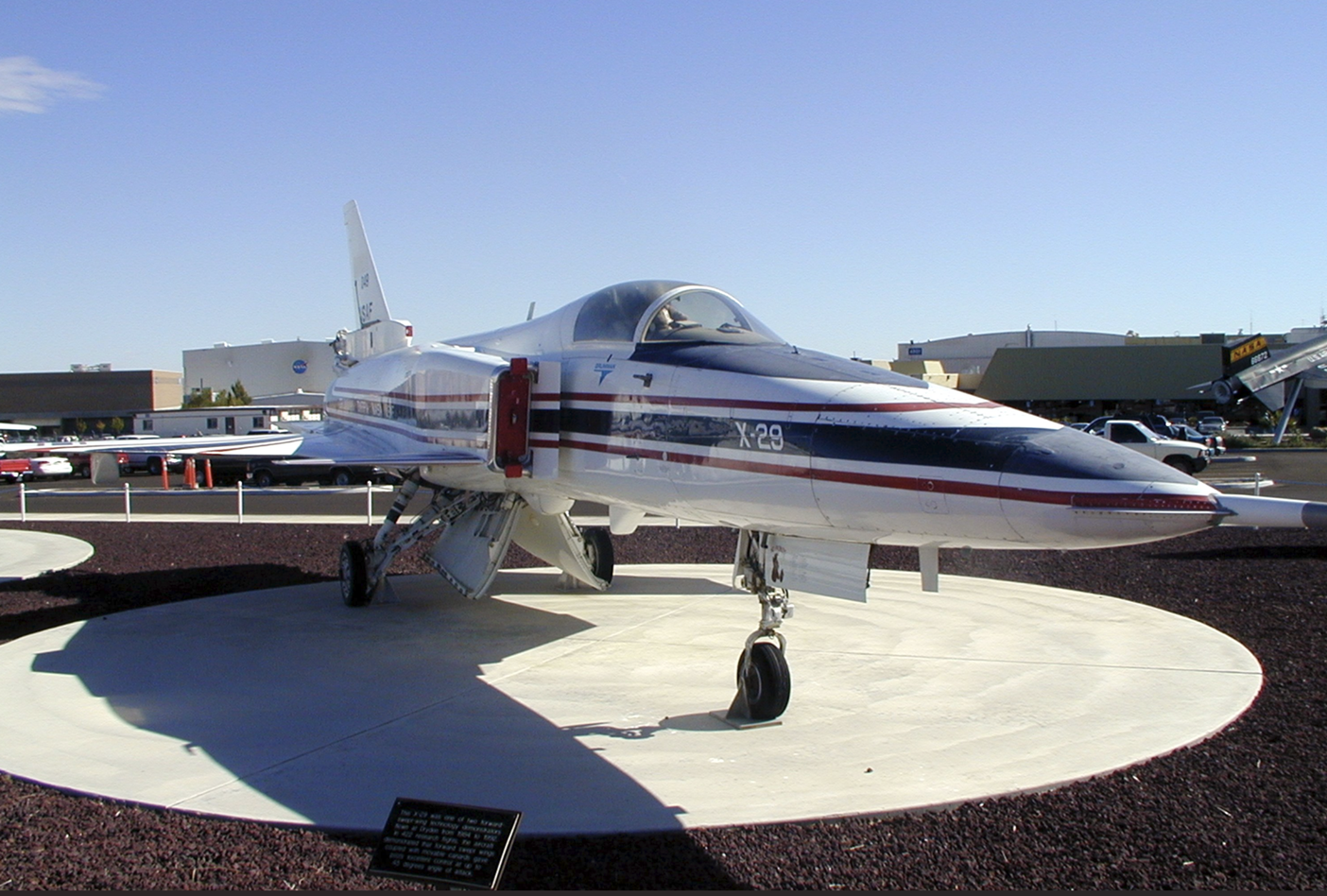
Grumman X-29, S/N 82-0049
On Display – NASA Armstrong, Edwards AFB
The Grumman X-29 was an experimental research aircraft developed in the 1980s to explore advanced aerodynamic concepts and flight control technologies. Built by Grumman for NASA and the U.S. Air Force, the X-29 is best known for its striking forward-swept wings, canards, and highly unstable aerodynamic design. First flown in 1984 at Edwards Air Force Base, the aircraft incorporated composite materials to handle the twisting forces inherent in forward-swept wings—something earlier designs could not withstand structurally.
The X-29 relied on advanced digital fly-by-wire flight controls to remain stable in flight, as it was intentionally aerodynamically unstable. This configuration allowed researchers to study enhanced maneuverability, high angle-of-attack performance, and control system integration. Although only two aircraft were built, the program generated extensive data on aeroelasticity, composites, and unstable aircraft control laws. While the X-29 never entered production, its research directly influenced later fighter designs and contributed to the advancement of modern high-performance aircraft technology.