
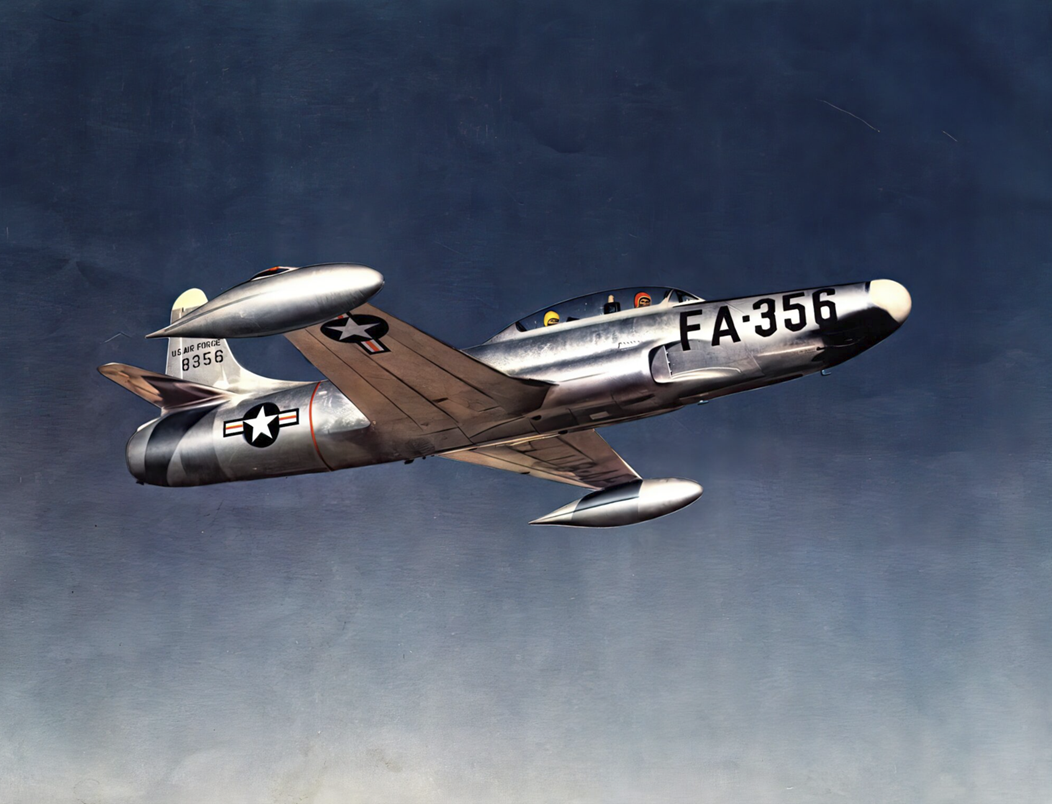
Lockheed Martin YF-94 Starfire
Museum Storage, Edwards AFB
The Lockheed Martin YF-94 Starfire was the prototype that led to the United States Air Force’s first operational all-weather jet interceptor, developed in the early years of the Cold War. Evolving from the twin-seat trainer variant of the Lockheed T-33 Shooting Star**, the YF-94 was modified extensively to incorporate radar and fire-control systems needed for nighttime and adverse-weather interception missions. Its development was a response to growing concerns about Soviet long-range bomber threats and the urgent need for a dedicated jet-powered interceptor capable of operating in all conditions.
To meet this requirement, Lockheed engineers equipped the YF-94 with a more powerful afterburning turbojet engine and installed an airborne interception radar system in the nose, along with an onboard radar operator seated behind the pilot. These modifications significantly altered the aircraft’s nose profile and systems layout compared to the standard T-33. The prototype first flew in 1949 and demonstrated that a relatively simple conversion of an existing airframe could rapidly deliver a viable interceptor platform during a time of intense geopolitical pressure.
The success of the YF-94 led directly to production models designated F-94A and F-94B, which entered service in the early 1950s. These aircraft became a key component of Air Defense Command units across the continental United States, forming part of the nation’s early jet-age defensive shield. Although later superseded by more advanced supersonic interceptors, the YF-94’s development marked an important step in establishing radar-equipped, two-seat jet interceptors as a cornerstone of U.S. air defense strategy.