
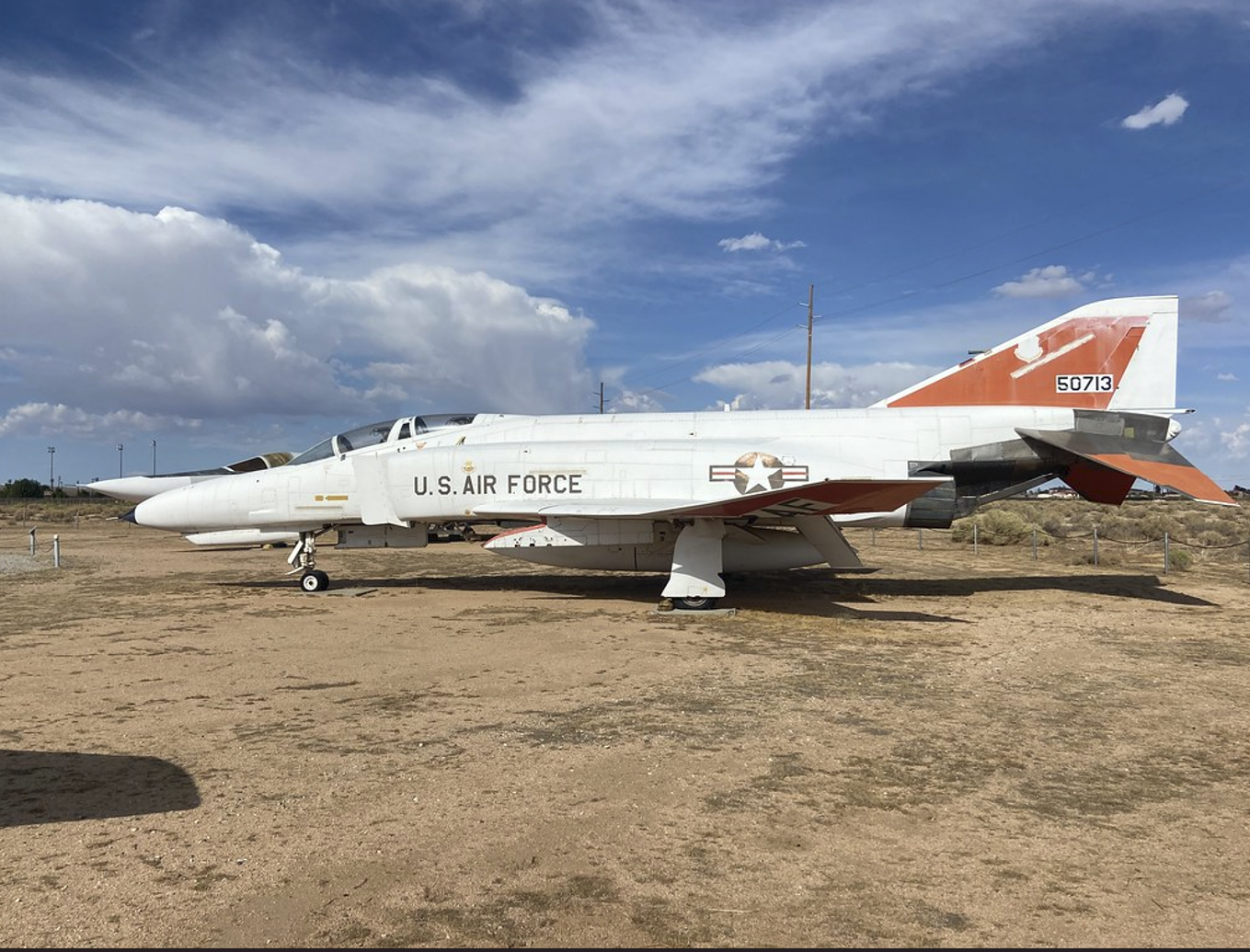
McDonnell Douglas YF-4E Phantom
The McDonnell Douglas YF-4E Phantom II was the prototype configuration that led to the F-4E variant of the legendary Phantom II series. Developed by McDonnell Douglas in the mid-1960s, the YF-4E represented a significant evolution of earlier F-4 models used extensively during the Vietnam War. Combat experience revealed the need for an internal cannon to supplement air-to-air missiles, particularly in close-range engagements where missile reliability and rules of engagement limited effectiveness. To address this, the YF-4E incorporated an internal M61 Vulcan 20mm rotary cannon in an extended nose section.
Beyond the addition of the gun, the YF-4E introduced improved avionics and radar systems to enhance both air-to-air and air-to-ground capabilities. The prototype first flew in 1965 and demonstrated that the Phantom airframe could successfully integrate the internal cannon without compromising overall performance. The redesigned nose slightly altered the aircraft’s profile but maintained the twin-engine, tandem-seat configuration that defined the Phantom family.
The success of the YF-4E led directly to the production of F-4E, which became one of the most widely built and exported Phantom variants. It served extensively with the U.S. Air Force and numerous allied nations, marking the final major refinement of the Phantom as a true multirole fighter capable of both air superiority and strike missions.